Overview
From two public datasets to one dependable daily workflow.
The goal was to combine COVID-19 data from The New York Times and Johns Hopkins, clean and reconcile the records, persist the results, and publish them for analysis. The entire workload runs without dedicated servers and is scheduled automatically.
Architecture
The design evolved with the implementation.
I started by mapping the expected flow and refined it as testing exposed better ways to separate transformation, persistence, recovery, and reporting concerns.
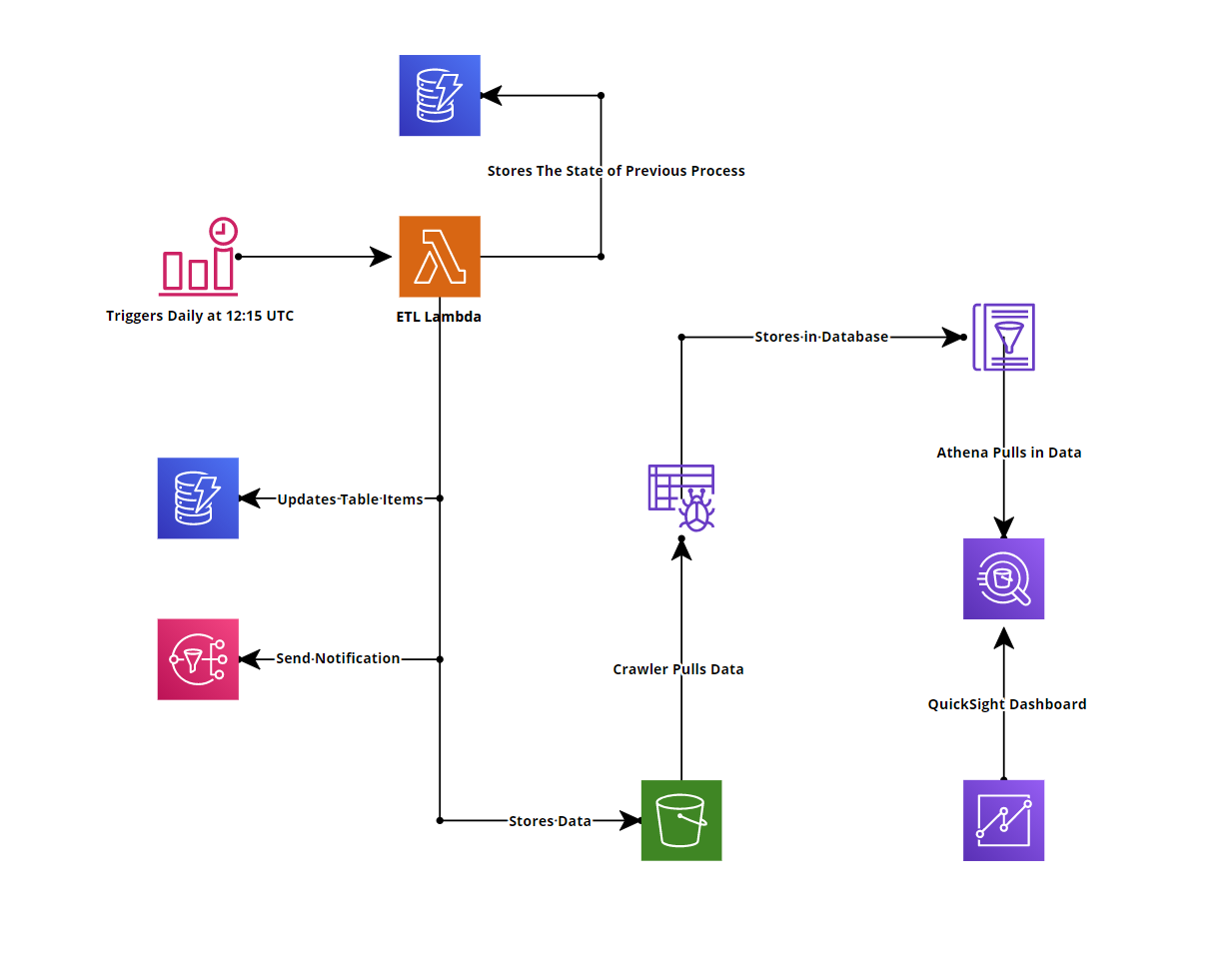
View the initial architecture
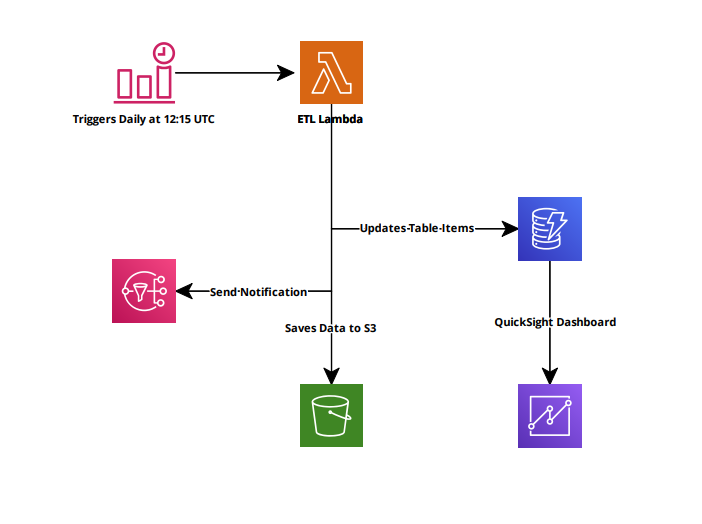
Pipeline
Extract, transform, validate, and load.
Schedule and extract
EventBridge starts the workflow each day at 12:15 UTC. A Python Lambda function downloads both datasets into Pandas dataframes.
Transform
The pipeline converts date fields, joins records by date, filters for US data, and replaces missing numeric values before loading.
Validate and load
Field formats and non-negative values are validated before Boto3 writes the transformed data to DynamoDB without overwriting existing partition keys.
Publish for analytics
Processed data is written to S3, cataloged by AWS Glue, queried through Athena, and consumed by QuickSight.
Reliability
Failures became part of the design.
A separate DynamoDB table records the status of each run. If processing fails, the next invocation handles the older data first and then moves to the latest dataset. SNS notifications report the status, number of updated rows, and the reason and row associated with a failure.


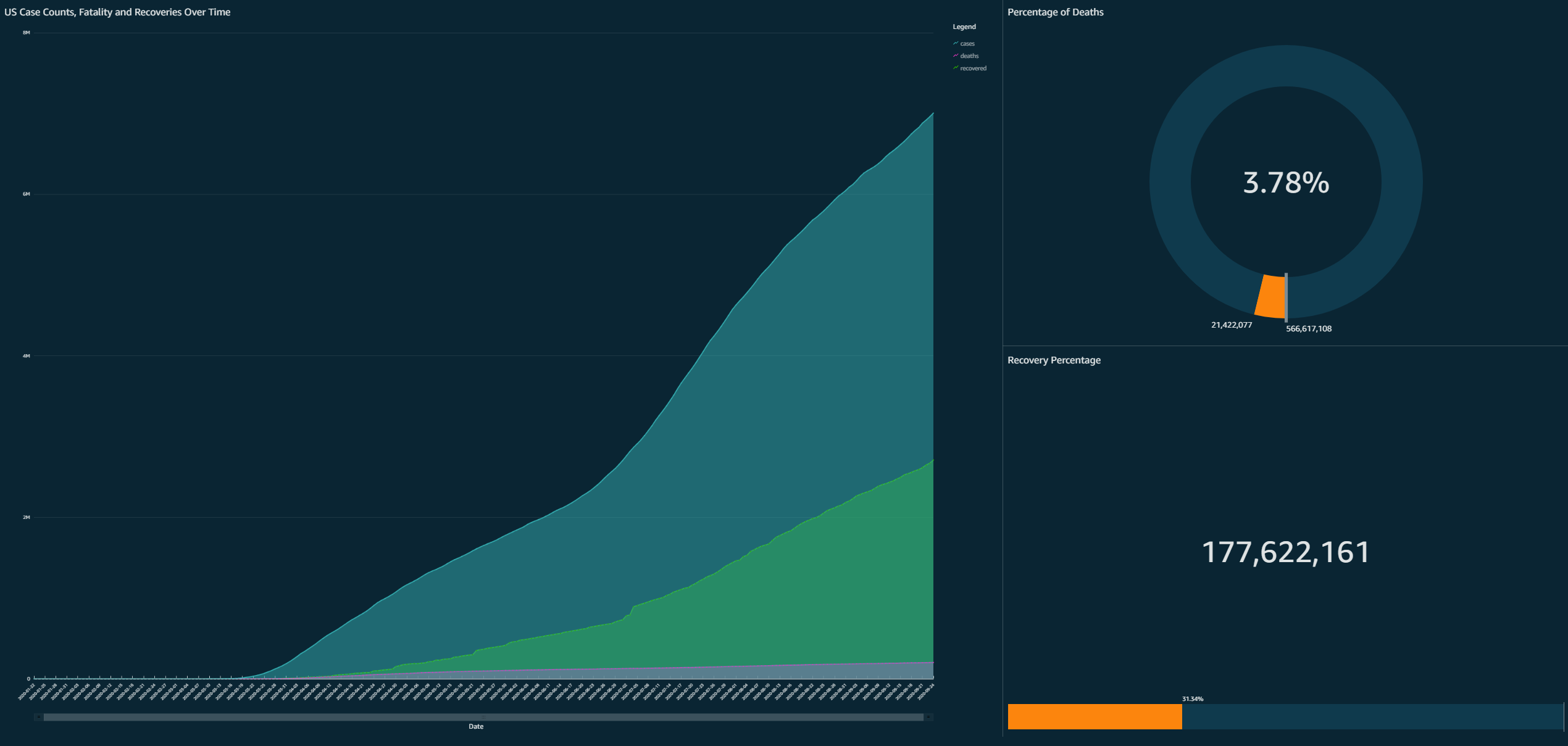
Dashboard
Making the processed data useful.
QuickSight could not consume DynamoDB directly, so the reporting path was redesigned. The load process also writes processed records to S3; Glue catalogs them, Athena makes them queryable, and QuickSight turns the result into a dashboard.
Lessons
What this project reinforced.
- Designing failure recovery early makes scheduled workloads easier to trust.
- Keeping transformation logic independent from storage makes it easier to reuse and test.
- Analytics requirements can reshape the storage path, so consumers should influence architecture decisions.
- Infrastructure as code makes a multi-service build repeatable and easier to evolve.